How to Transport an ATV Safely and Efficiently
Transporting an ATV (All-Terrain Vehicle) might seem straightforward, but without the right equipment and preparation, it can quickly become a stressful and even dangerous task. Whether you’re heading out on an off-road adventure, moving to a new location, or simply taking your ATV in for maintenance, knowing how to haul it properly is essential for your safety and the protection of your equipment.
In this guide, we’ll walk you through everything you need to know about transporting an ATV safely, including choosing the right trailer, securing your vehicle, and driving tips that make the entire process smoother and safer.
Why Proper ATV Transport Matters
One of the biggest mistakes ATV owners make is trying to haul their vehicles in a standard pickup truck bed or a general-purpose trailer. While it might seem convenient, this method can actually be hazardous.
An improperly secured ATV can shift during transit, damaging your truck or trailer and potentially injuring people nearby. In addition, loading and unloading an ATV without the proper setup can be difficult and unsafe, especially on uneven terrain.
Using a trailer specifically designed for ATV transport ensures that your ride stays secure and makes the entire process easier and more efficient.
What is an ATV Trailer?
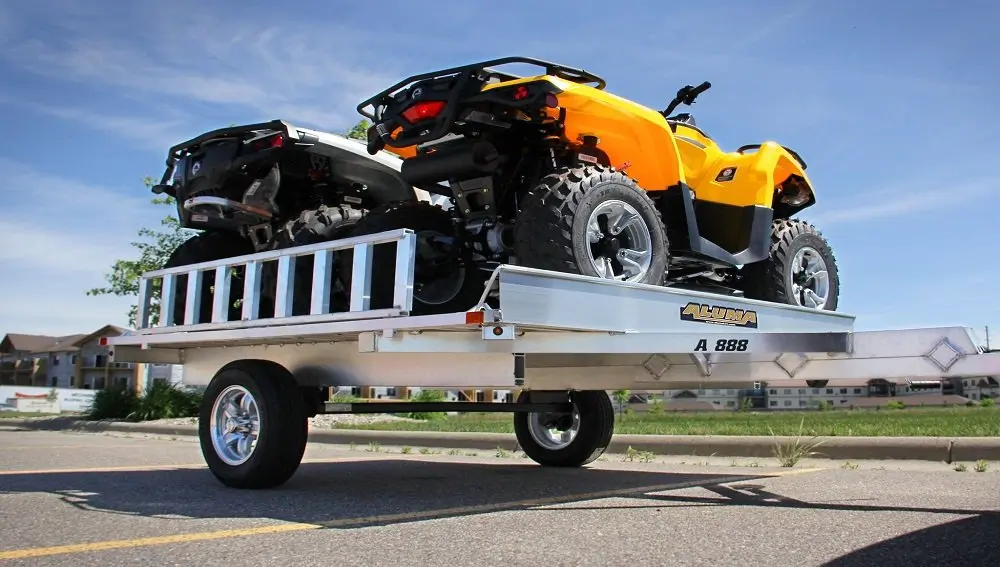
An ATV trailer is a type of trailer built specifically to carry one or more ATVs. These trailers are typically built low to the ground, making it easier to load and unload your vehicle. Many models come with built-in ramps or foldable gates that double as rear security barriers once your ATV is loaded.
The materials and structure of an ATV trailer are designed to support the weight of ATVs, which can range from 300 to over 1,000 pounds depending on the model. You’ll also find anchor points for tie-down straps and other safety features to ensure your ATV doesn’t shift while you’re driving.
Some ATV trailers are enclosed, offering added protection from the elements. These are especially helpful if you plan to travel long distances or through unpredictable weather.
Choosing the Right ATV Trailer
There are a few key factors to consider when selecting the best trailer for transporting your ATV:
- Size and Weight Capacity
Make sure the trailer is large enough to accommodate your ATV and strong enough to support its weight. Check the Gross Vehicle Weight Rating (GVWR) to ensure it meets your needs. - Trailer Type
- Single ATV Trailers – Ideal if you only need to transport one ATV.
- Multi-ATV Trailers – Best for families or groups that ride together.
- Enclosed Trailers – Offers weather protection and additional security.
- Ramp and Gate Features
Look for trailers with integrated ramps or tailgates that double as ramps. This makes loading and unloading easier and safer. - Tie-down Points
Ensure the trailer has multiple tie-down points to secure the ATV properly. Ratchet straps are highly recommended for a snug, no-slip hold.
How to Load and Secure Your ATV
Proper loading and securing are essential parts of safe ATV transportation. Here’s a step-by-step process to follow:
- Inspect the Trailer Ramp
Before loading, make sure the ramp is clean, dry, and properly aligned. If it’s detachable, confirm that it’s securely positioned so it won’t slip while you’re driving the ATV up or down. - Load Slowly and Evenly
Drive your ATV slowly up the ramp, keeping the vehicle aligned with the center of the trailer. If your ATV is especially large or heavy, have a second person spot you to ensure safety. - Use High-Quality Tie-Down Straps
Once the ATV is in position, use ratchet straps or heavy-duty tie-downs to secure all four corners. Loop the straps through the frame, not the suspension or handlebars, to prevent damage during transport. - Double-Check Everything
Before hitting the road, walk around the trailer and verify that all straps are tight and that nothing is loose or hanging. This small step can prevent serious problems down the road.
Tips for Towing an ATV Trailer
Towing a trailer—especially with a heavy load like an ATV—requires some adjustments to your normal driving habits. Here are some crucial tips to ensure a safe trip:
- Practice Before Long Trips
If you’re new to towing, practice driving with the trailer on quiet local roads. Learn how your vehicle handles turns, braking, and reversing with a trailer in tow. - Take It Slow
Accelerate gradually and avoid sudden braking. Your stopping distance increases significantly when towing, so leave extra space between you and the car in front of you. - Avoid Sharp Turns and Sudden Lane Changes
Every movement your vehicle makes will impact the trailer. Sudden lane changes can cause the trailer to sway or fishtail. Smooth, gradual maneuvers are safer. - Watch for the Trailer Sway
If your trailer begins to sway at high speeds, ease off the accelerator and keep the steering wheel straight. Do not slam on the brakes, as that can make the sway worse. - Perform Regular Checks
During long trips, stop every 50–100 miles to check the tie-downs, tires, and trailer lights. Bumps and vibrations on the road can loosen straps or bolts over time.
Common Mistakes to Avoid
- Overloading the trailer beyond its rated capacity.
- Using old or worn-out straps, which can snap under pressure.
- Not checking tire pressure on the trailer—underinflated tires can lead to blowouts.
- Ignoring local trailer towing laws, which may require lights, brakes, or safety chains.
Final Thoughts
Transporting an ATV doesn’t have to be stressful or dangerous—as long as you take the time to prepare properly. The right ATV trailer, combined with safe loading techniques and smart driving habits, can turn a complicated chore into a smooth and enjoyable experience.
Whether you’re heading out for a weekend of trail riding or transporting your ATV across the state, using proper equipment and following these tips will help ensure your vehicle arrives safely—and your trip starts on the right foot.